
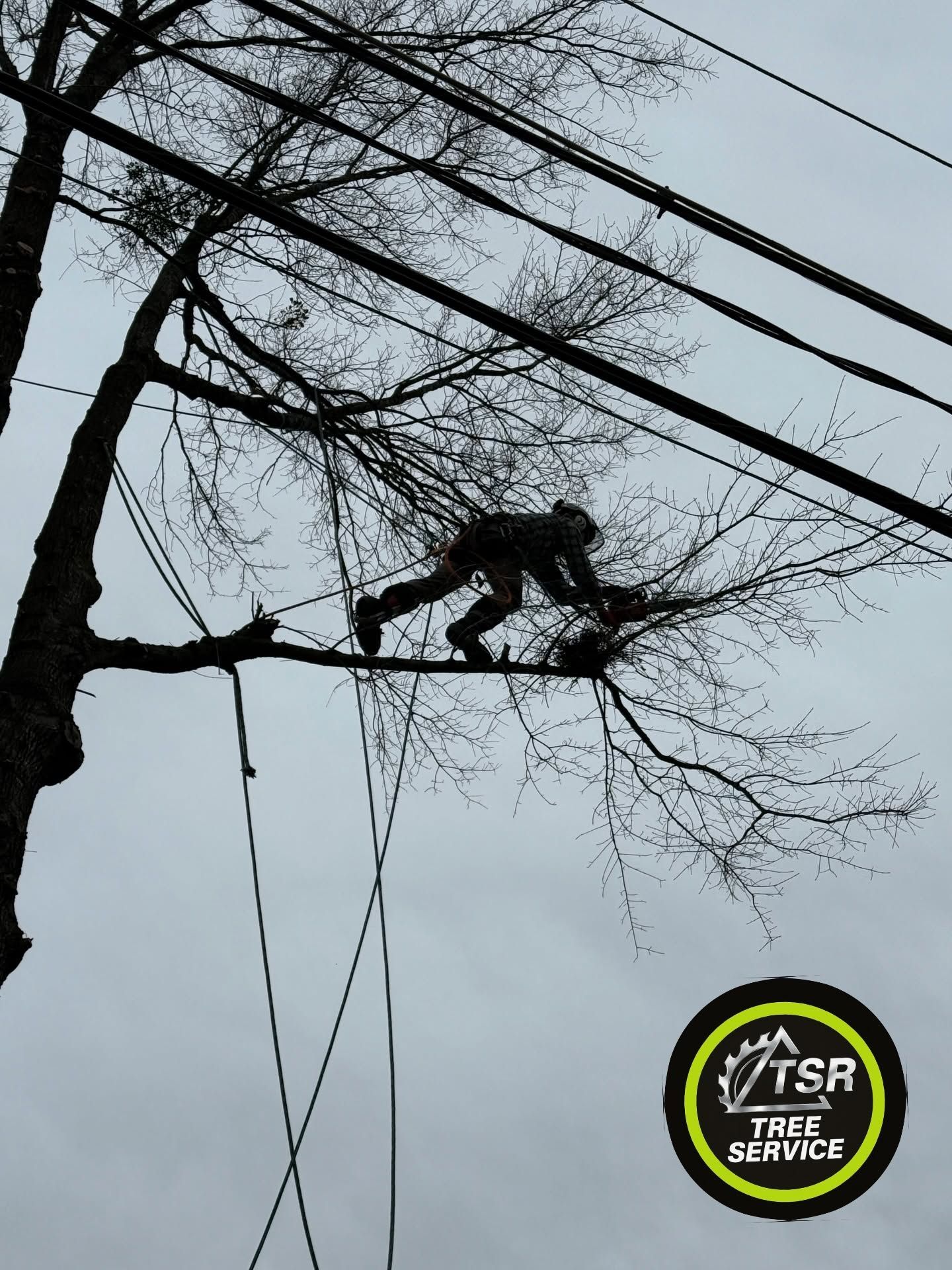
Growth Controlled Before Damage Develops
Tree Trimming in Wake Forest and surrounding areas for branches overhanging roofs, limbs blocking walkways, and growth encroaching on driveways
Limbs scraping roof shingles during wind events accelerate wear and create entry points for water infiltration. TSR Tree Service, LLC provides tree trimming in Wake Forest, Raleigh, Wendell, and throughout the North Raleigh area that removes overgrown branches before they damage structures, clears sight lines obstructed by dense growth, and reduces storm damage risk by eliminating weak or overextended limbs. Your trees receive cuts positioned to support healthy regrowth patterns while achieving the clearance your property requires around buildings, utility lines, and high-traffic areas.
Trimming addresses branches that have grown into contact with roofing or siding, limbs hanging low enough to obstruct vehicle or pedestrian passage, growth shading areas where you need sunlight for lawns or gardens, and canopy sections that trap moisture or block airflow in ways that promote disease development. North Carolina's growing season produces rapid limb extension on species like oaks and maples, requiring periodic trimming to maintain safe distances from structures and prevent crowding that weakens interior branches.
Schedule seasonal trimming to address growth before branches reach structures or create clearance problems.
How Trimming Addresses Property-Specific Growth Challenges
Trimming plans are developed based on tree species, growth rates, current canopy structure, and proximity to buildings and utilities. Cuts are made at branch collars where natural healing occurs most efficiently, removing length without leaving stubs that invite decay or making flush cuts that damage trunk tissue. Species-specific considerations guide how much canopy can be removed in a single session—hardwoods tolerate heavier trimming than conifers, and timing affects regrowth vigor depending on whether cuts occur during dormancy or active growth periods.
After trimming, you notice daylight reaching previously shaded lawn areas where grass can now grow more vigorously, eliminated contact points where branches no longer scrape against gutters or roof edges during storms, restored clearances that allow safe passage under canopies along driveways and walkways, and improved views where dense growth previously blocked sightlines. Trees maintain their natural shape while conforming to the functional requirements of your property layout.
Trimming improves tree health by removing branches competing for light and nutrients, thinning canopies to improve airflow that reduces fungal disease pressure, and eliminating rubbing limbs that create bark wounds susceptible to pest invasion. Proper cutting techniques prevent the tearing and bark stripping that occur when branches are removed incorrectly, ensuring wounds seal cleanly and regrowth occurs in structurally sound directions.
Questions Before Starting Your Project
Property owners considering trimming services want to understand timing, tree response, and how much growth can be removed safely.
TSR Tree Service, LLC tailors trimming to your property's specific needs, whether that involves maintaining clearance around a single tree near your home or managing growth across multiple specimens throughout your landscape. Contact us to review your trees and establish a trimming schedule that keeps growth under control and your property safe.
What time of year is best for tree trimming?
Late winter before bud break allows maximum removal without stressing trees, though summer trimming controls vigorous growth and is necessary when branches create immediate hazards or obstruct structures regardless of season.
How much of the canopy can be removed without harming the tree?
Most species tolerate removal of up to twenty-five percent of live canopy in a single session, with larger reductions staged over multiple years to avoid shock that weakens trees and invites pest or disease problems.
How do you determine which branches to remove?
Decisions prioritize dead or diseased wood, branches with narrow attachment angles prone to splitting, limbs crossing and rubbing against each other, and growth extending toward structures or utility lines where clearance is required.
What trimming challenges are common in Wake Forest's climate?
Humid summers promote rapid shoot growth that requires more frequent trimming cycles than drier climates, and ice accumulation during occasional winter storms breaks branches more readily on trees not trimmed to reduce weight in overextended limbs.
How does trimming differ from pruning?
Trimming focuses on controlling size and clearing obstructions, while pruning emphasizes structural correction and health improvement through selective removal of problematic growth patterns, though the terms are often used interchangeably in residential contexts.