Hazards Eliminated Before Failure Occurs
Tree Removal in Wake Forest and surrounding areas for diseased trees, storm-damaged specimens, and unstable trees near structures
Trees with visible trunk decay, severe lean toward buildings, or canopy dieback exceeding half the crown present risks that increase with every storm season. Tree removal in Wake Forest, Youngsville, Rolesville, or a neighboring community addresses these conditions by eliminating specimens that pruning cannot salvage, clearing space for property development or landscape redesign, and responding to storm damage that leaves trees structurally compromised. TSR Tree Service, LLC evaluates each tree's stability, plans removal sequences that protect nearby structures and utilities, and completes projects with thorough debris cleanup that leaves your property ready for its next use.
Removal becomes necessary when root systems fail and trees begin leaning beyond recovery angles, when internal decay hollows trunks to the point where structural integrity is lost, when disease spreads through the canopy faster than treatment can control, or when development plans require clearing specific trees to accommodate construction. North Carolina's summer thunderstorms and occasional ice events increase failure risk for trees already weakened by age, pest damage, or root disturbance from construction activity.
Request an evaluation to determine whether problem trees require removal or can be preserved through corrective pruning.
What Changes After Hazardous Trees Are Removed
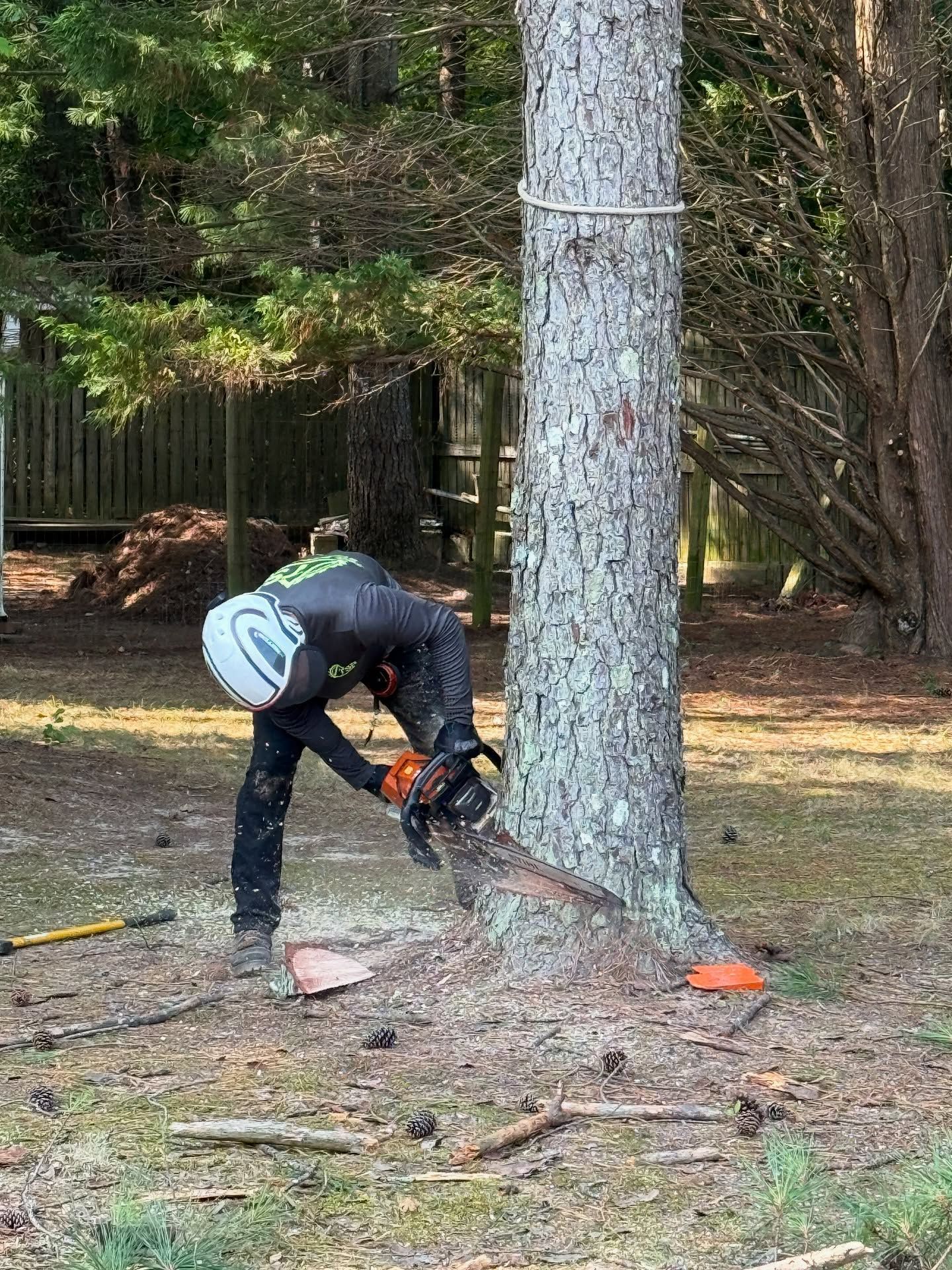
Tree removal involves sectional dismantling when trees are near structures, using rigging systems to control each piece as it's cut and lowered to prevent impact damage. Felling is used when adequate clearance exists and directional cuts can guide the tree safely to the ground. Cranes are deployed for removals over buildings, near utility lines, or in confined spaces where rigging alone cannot provide sufficient control.
Once removal is complete, you notice eliminated threats where leaning or dead trees previously loomed over driveways, roofs, or play areas, restored sunlight reaching landscape zones that were heavily shaded, and cleared space for replanting with species better suited to the available area or soil conditions. Properties affected by storm damage see restored safety where hanging limbs or split trunks no longer threaten to collapse during the next wind event.
Cleanup includes hauling all wood and debris from the site, removing smaller branches and twigs scattered during the removal process, and grinding stumps to several inches below grade if stump removal is part of the project scope. Root systems left in place decompose naturally over time, though stump grinding accelerates site readiness for lawn restoration or new plantings.
Common Questions About This Service
Tree removal decisions involve understanding when removal is necessary, what the process entails, and how your property will look afterward.
TSR Tree Service, LLC removes trees of all sizes and conditions, from small ornamentals in confined yards to large hardwoods requiring crane assistance, with attention to protecting your property throughout the removal process. Schedule a property visit to assess trees you're concerned about and receive specific recommendations based on their condition and location.
What signs indicate a tree needs removal rather than trimming?
Indicators include trunk cracks or splits extending through the bark, root plate lifting where soil mounds on one side of the trunk, fungal growth at the base signaling internal decay, and canopy dieback concentrated on one side suggesting root damage.
How do you protect structures during tree removal near buildings?
Rigging ropes anchor to the tree above each cut, allowing controlled lowering of sections weighing hundreds of pounds, while ground crew members guide pieces away from structures and ensure landing zones remain clear of obstacles.
What permits are required for tree removal in Wake Forest?
Most residential removals do not require permits unless trees are protected species or exceed certain diameter thresholds, though properties in planned developments may have homeowner association restrictions requiring approval before removal.
How is debris managed during removal projects?
Branches are fed through chippers that reduce them to mulch loaded into trucks for hauling, while logs are cut into transportable lengths and removed from the site unless you request they be left for firewood use.
What happens if a tree is removed near underground utilities?
Utility locations are verified before equipment enters the site, stump grinding depths are limited to avoid contact with buried lines, and root removal is performed with hand tools or air excavation when working within marked utility corridors.