
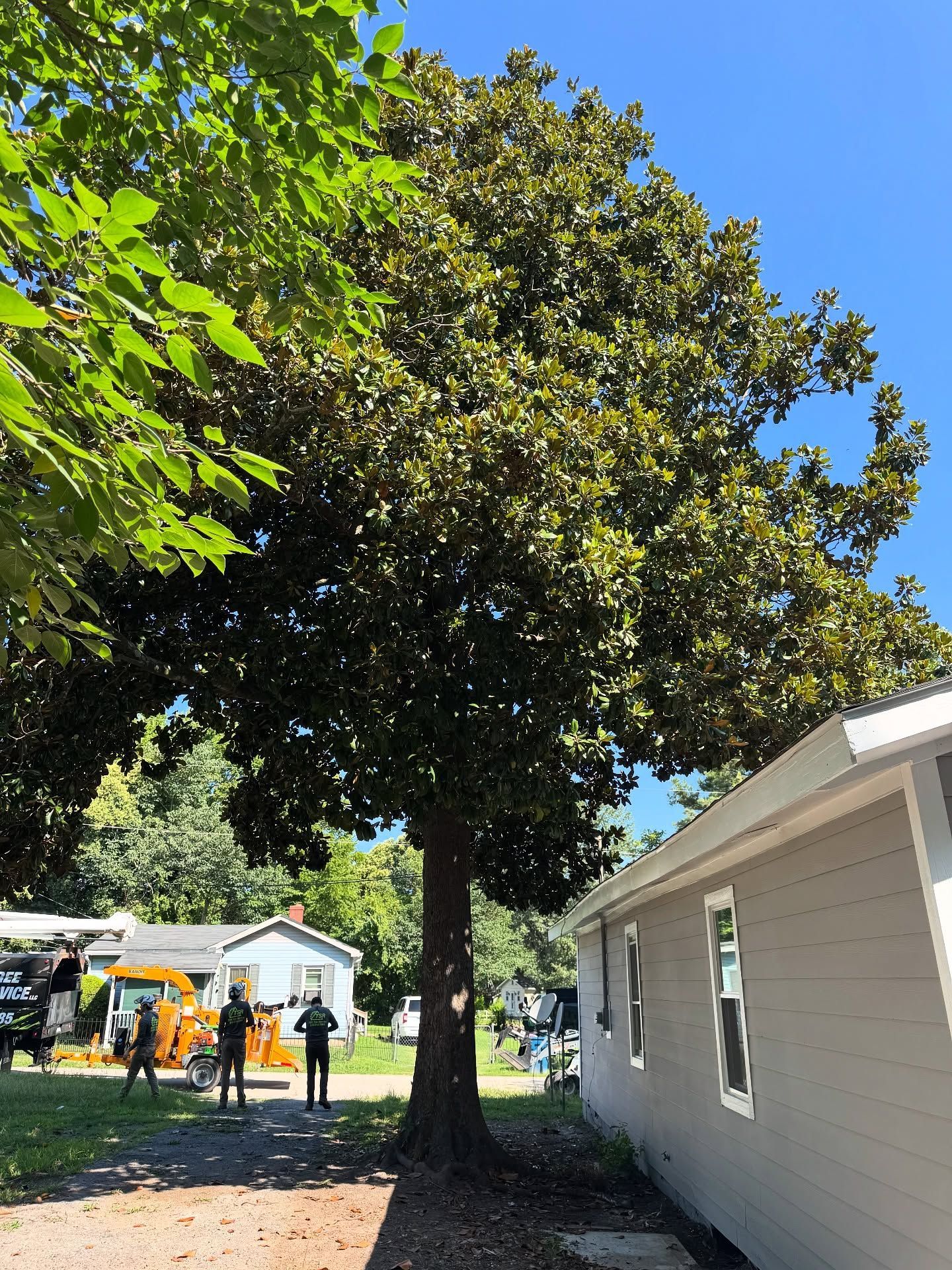
Structural Health Restored Through Selective Removal
Tree Pruning in Wake Forest and surrounding areas for weak branch unions, diseased limbs, and trees requiring structural correction
Pruning supports long-term tree health and structural integrity by removing growth that threatens stability or harbors disease. Weak, damaged, diseased, or crossing branches are removed to prevent future failures and improve the tree's ability to withstand wind loads and storm stress. TSR Tree Service, LLC applies species-specific pruning techniques in Wake Forest, Zebuilon, Rolesville, and neighboring communities that preserve natural growth habits while correcting structural problems, improving airflow through dense canopies, and enhancing sunlight penetration to interior foliage and understory plantings.
This work addresses branches with codominant stems that create weak attachment points prone to splitting, limbs affected by fungal infections or pest damage spreading through the canopy, crossing branches that rub bark and create entry wounds for pathogens, and interior growth so dense that air circulation is restricted and promotes moisture-related disease development. Timing decisions account for species-specific responses, with most pruning scheduled during dormancy when energy reserves are high and wound response is vigorous once spring growth begins.
Schedule a tree health evaluation to identify pruning needs and establish optimal timing for your specific trees.
What Proper Pruning Requires
Pruning begins with assessing the tree's overall structure, identifying limbs with poor attachment angles or visible defects, and determining which cuts will redirect growth energy toward stronger scaffold branches. Each cut is positioned just outside the branch collar where the tree's natural compartmentalization response seals wounds most effectively. Species considerations influence approach—oaks are pruned during dormancy to minimize oak wilt infection risk transmitted by beetles attracted to fresh cuts, while maples can be pruned through wider seasonal windows without comparable disease concerns.
Following pruning, you notice improved canopy structure where weak or competing leaders have been removed, eliminated rubbing points where branches no longer contact each other and damage bark, increased light reaching lower branches and ground-level plantings previously shaded by overly dense growth, and better airflow through the canopy that reduces humidity levels promoting fungal diseases common in North Carolina's climate. Trees develop more balanced forms as growth energy redirects toward remaining branches.
Pruning includes removing deadwood that provides no benefit to the tree and poses falling hazards during storms, thinning crowded interior growth to reduce wind resistance and prevent branch whipping that causes breakage, and correcting growth patterns where poor early training created structural weaknesses now requiring intervention before they lead to limb failure. Cuts are never made arbitrarily—each removal serves a specific health or structural objective based on how the tree will respond and redirect growth.
What Property Owners Usually Ask
Pruning raises questions about technique, timing, and what makes this work different from standard trimming.
TSR Tree Service, LLC designs pruning interventions based on each tree's current condition, species-specific growth characteristics, and your long-term landscape objectives. Arrange a consultation to have your trees evaluated and receive pruning recommendations that support their health and structural development over decades of continued growth.
What is the branch collar and why does it matter for pruning cuts?
The branch collar is the swollen area where a branch attaches to the trunk or parent limb, containing specialized cells that compartmentalize wounds by forming callus tissue that gradually seals the cut and prevents decay from spreading into main structural wood.
How do you identify which branches need pruning?
Assessment looks for narrow crotch angles below forty-five degrees indicating weak attachments, visible cracks or splits in branch unions, discolored foliage suggesting vascular disease, and crossing limbs where bark is worn from repeated contact during wind movement.
Why does pruning timing vary by tree species?
Some species like oaks are vulnerable to insect-vectored diseases when pruned during active beetle flight periods, while others respond with excessive sap flow if pruned during spring growth surges, and still others tolerate pruning year-round without increased risk.
What happens if too much is removed during pruning?
Over-pruning stresses trees by removing excessive leaf area needed for photosynthesis, triggers survival responses that produce weak, rapidly growing water sprouts, and depletes energy reserves required for root growth and defense against pests and diseases.
How does pruning improve tree appearance?
Selective removal creates balanced canopy shapes by reducing asymmetry, reveals natural branching architecture previously hidden by crowded growth, and allows light to reach interior areas where foliage can develop more uniformly throughout the tree structure.