
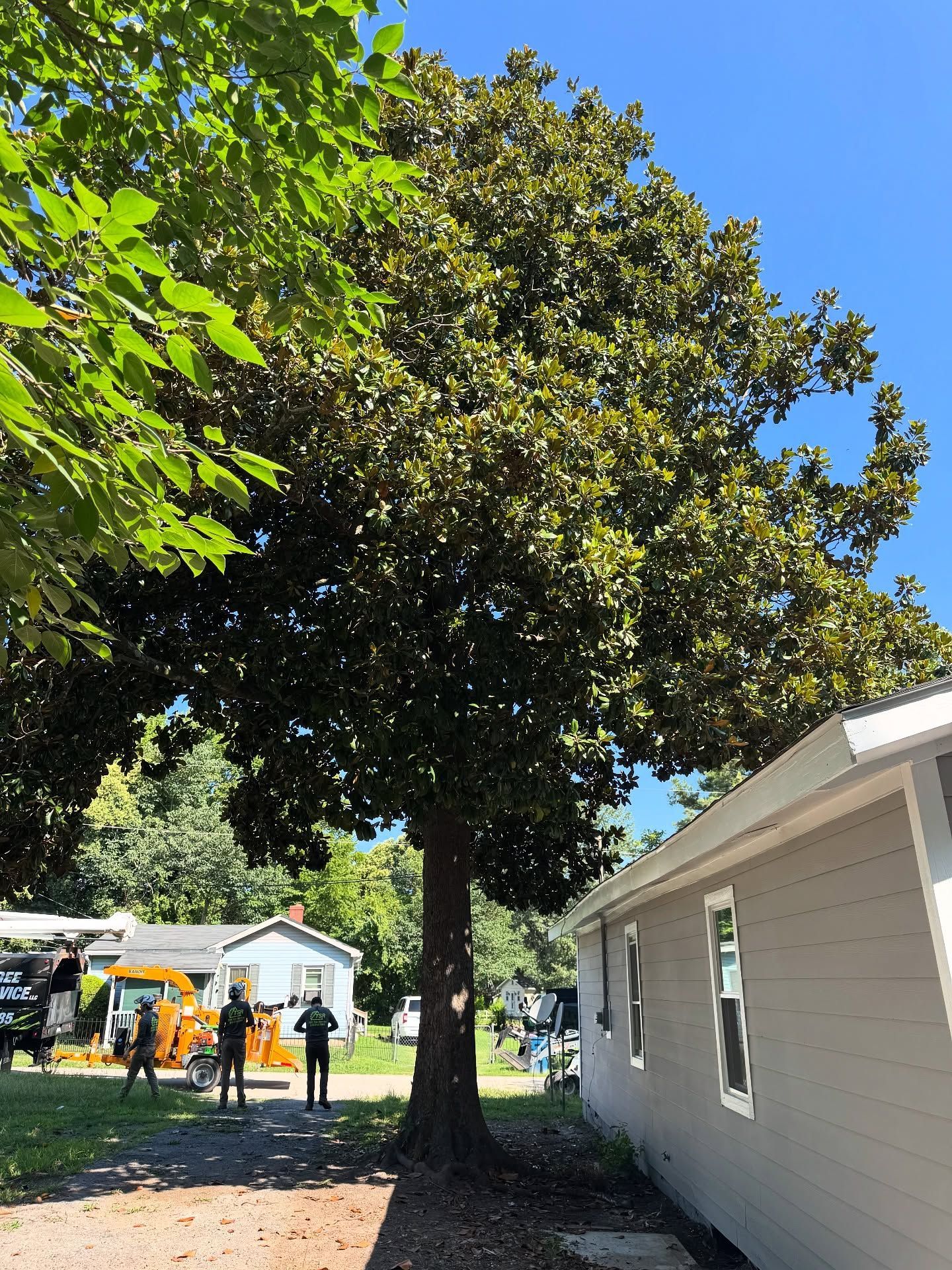
Catching Problems Before Trees Decline
Tree Health Maintenance in Wake Forest and surrounding areas for properties with valuable or aging trees
Visible canopy thinning, bark splits, and premature leaf drop signal underlying stress that accelerates when left unmonitored. Tree health maintenance involves systematic inspections that document structural weaknesses, pest colonization, and disease symptoms before they compromise tree stability or spread to adjacent plantings. TSR Tree Service, LLC conducts assessments for properties across Wake Forest, Rolesville, Zebulon and neighboring communities to identify conditions that shorten tree lifespan, develop management strategies that address specific threats, and recommend interventions that preserve trees contributing to property value and landscape function.
Inspections examine root collar condition, trunk integrity, branch attachment strength, and foliage density to establish baseline health metrics. The process identifies issues like girdling roots that restrict nutrient flow, cankers that weaken structural wood, and pest activity such as boring insects that tunnel through cambium layers. Proactive monitoring allows treatments or corrective pruning when trees still have sufficient vigor to recover, rather than waiting until decline becomes irreversible and removal becomes necessary.
Schedule a tree health assessment to document current conditions and develop a management approach for your landscape.
What Regular Monitoring Reveals About Tree Condition
Health evaluations track changes over time, noting whether crown density improves, wounds compartmentalize, or stress symptoms worsen despite interventions. Inspectors look for fungal fruiting bodies that indicate internal decay, check for soil compaction around root zones that limits water infiltration, and assess whether pruning wounds have closed properly. North Carolina's variable moisture patterns and temperature swings create conditions that favor certain pathogens and stress responses, making local familiarity with regional tree issues critical for accurate assessments.
After inspections, property owners receive documentation of observed conditions, prioritized recommendations for pruning or treatment, and timelines for follow-up evaluations based on tree species and identified concerns. Trees under active management show improved structural stability, more consistent growth patterns, and better resistance to opportunistic pests that target weakened specimens. You gain clarity about which trees require immediate attention versus those needing only routine monitoring.
Maintenance plans typically include periodic inspections, scheduled pruning to remove hazardous limbs, and monitoring for pest or disease outbreaks that emerge seasonally. Not all identified issues warrant intervention—minor wounds often seal naturally, and some pest activity remains below thresholds that justify treatment. The goal is distinguishing between conditions that trees can tolerate and those that will progress into failure risks or widespread health decline.
Questions About Keeping Trees Healthy
Tree health maintenance involves understanding how inspections work, what findings mean for long-term care, and which interventions actually extend tree lifespan versus those that provide minimal benefit.
TSR Tree Service, LLC provides tree health evaluations that document conditions affecting your landscape's most valuable assets. Reach out to establish a monitoring schedule that catches developing problems while management options remain effective.
What do inspections look for that property owners typically miss?
Inspectors identify subtle indicators like small cavities, bark cracks, or branch dieback patterns that signal internal decay, root damage, or vascular disease before obvious symptoms like large dead limbs or canopy collapse appear.
How does monitoring prevent future tree-related problems?
Regular documentation tracks whether conditions stabilize, improve, or worsen over time, allowing interventions like cabling, targeted pruning, or pest management to occur while trees retain enough vigor to respond positively.
When should trees receive health assessments in Wake Forest?
Late winter allows clear views of branch structure without foliage, while late summer reveals stress symptoms that emerge during peak growing season, so many properties benefit from evaluations at both times to capture different diagnostic information.
Why do some tree problems lack effective treatments?
Advanced decay, extensive root loss, and systemic vascular diseases often progress beyond the point where trees can recover, making removal safer and more cost-effective than attempting treatments unlikely to restore structural integrity or health.
What determines whether a tree is worth the cost of ongoing management?
Trees providing significant shade, windbreak function, property value, or aesthetic contribution justify maintenance investment, while those in decline with limited remaining lifespan or high failure risk may warrant removal and replacement.