
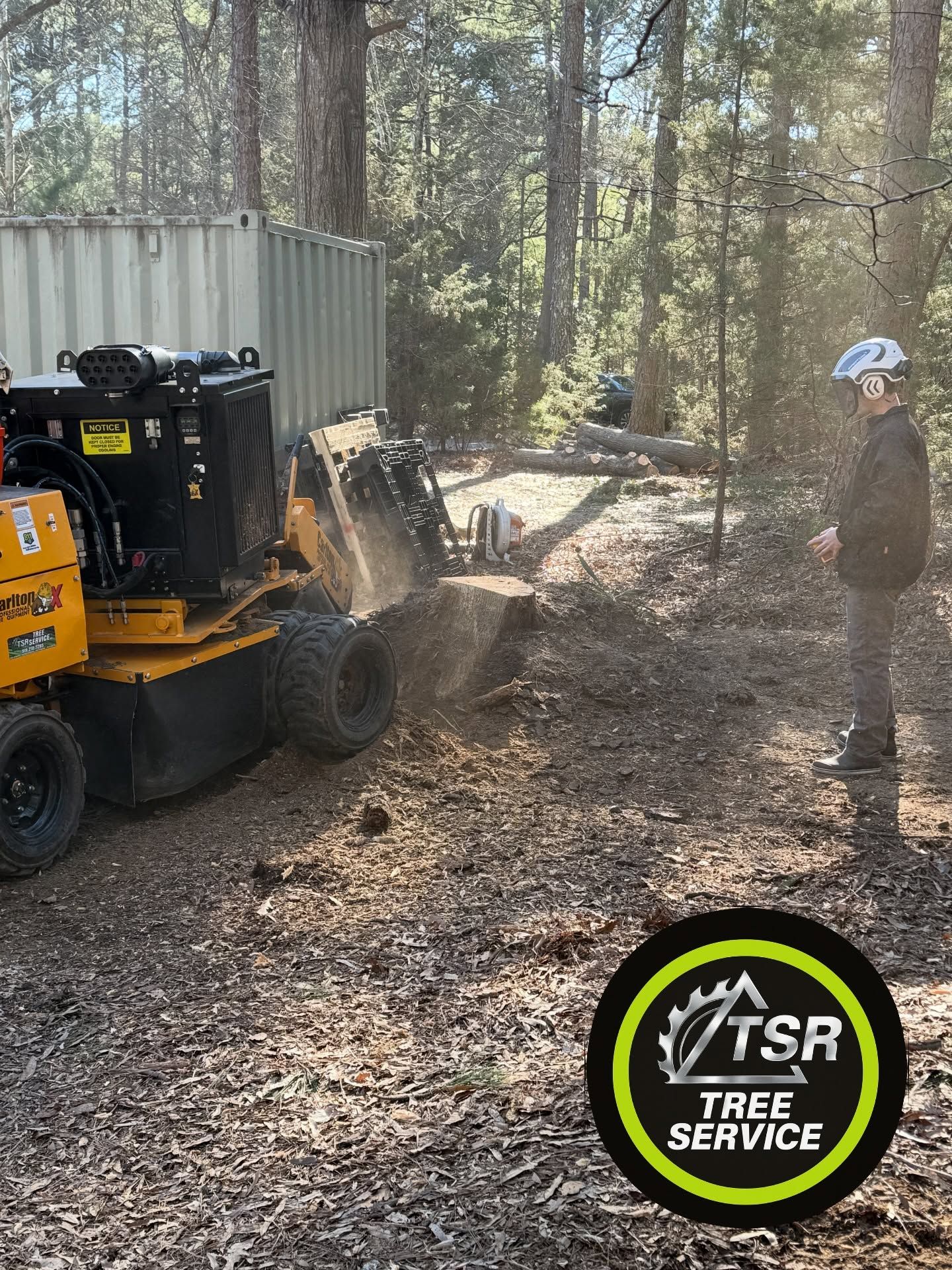
Stumps Removed Without Tearing Up Your Yard
Stump Grinding in Wake Forest and surrounding areas for property cleanup after tree removal
TSR Tree Service, LLC handles stump grinding throughout Wake Forest, Raleigh, Youngsville, and throughout the North Raleigh area, removing the remnants left behind when trees come down. The process addresses visible stumps that interfere with mowing patterns, landscaping plans, and safe foot traffic across residential and commercial properties. Grinding eliminates the tripping hazard and prevents decay that attracts termites, carpenter ants, and fungal growth to the area.
Stump grinding uses rotating carbide teeth to reduce stumps several inches below ground level, transforming solid wood into mulch that fills the resulting depression. The approach clears the surface obstruction without excavating surrounding soil or damaging nearby plantings, driveways, or utility lines. Properties gain usable space that supports new sod installation, garden bed expansion, or hardscape construction where stumps previously blocked development.
Request an on-site evaluation to determine grinding depth requirements based on your landscape goals.
What Stump Grinding Accomplishes for Your Property
The grinder wheel chips through stump wood and surface roots in horizontal passes, working down to a depth that allows soil and grass to cover the area completely. The resulting wood chips can remain as organic filler or be hauled away depending on how you plan to use the cleared space. Most grinding projects eliminate stumps to depths between six and twelve inches, sufficient for turf establishment or shallow planting beds.
After grinding finishes, the former stump location becomes level with adjacent ground, and no raised wood remains to catch mower blades or create uneven walking surfaces. The site no longer supports the fungi and insect colonies that develop in decaying stumps over time. Properties regain clean sight lines, and lawn care equipment moves freely across areas where stumps previously required navigation.
Grinding does not remove the entire root system, but subsurface roots decay naturally without sprouting new growth once the stump is gone. Deeper grinding becomes necessary only when installing structures with foundations or when planting large trees in the same location. Surface restoration typically requires adding topsoil and seed to the depression left after wood chips settle.
Questions Property Owners Ask About Grinding
Stump grinding projects vary depending on stump diameter, root spread, and site access, so understanding the process helps set realistic expectations for cleanup and restoration work.
TSR Tree Service, LLC provides stump grinding that clears your property without extensive excavation or landscape disruption. Schedule your grinding service to reclaim usable yard space and eliminate the maintenance obstacles stumps create.
What happens to the wood chips created during grinding?
The chips fill the depression left by the stump and break down over several months, or they can be removed entirely if you prefer a clean site ready for immediate replanting or construction.
How does grinding avoid damage to nearby structures or plants?
The grinder operates in a controlled cutting pattern that targets only the stump and surface roots, with adjustable depth settings that prevent contact with buried utilities, foundations, or adjacent root systems from trees you want to keep.
When should stumps be ground after tree removal?
Grinding can occur immediately after a tree comes down or months later, though older stumps become harder and may require additional time to process, especially with species like oak or hickory common in Wake Forest yards.
Why do some stumps cost more to grind than others?
Diameter, wood hardness, and accessibility determine labor and equipment time, with stumps located near fences, between buildings, or surrounded by landscape features requiring more careful maneuvering than those in open lawn areas.
What prevents stumps from regrowing after grinding?
Grinding removes the stump tissue that generates new shoots, and without that growth structure, roots gradually deplete stored energy and decay naturally, eliminating regrowth in nearly all tree species.