
Landscapes That Stay Safe and Functional
Residential Tree Services in Wake Forest and surrounding areas for properties with overgrown limbs, storm-damaged trees, and declining tree health
TSR Tree Service, LLC handles residential tree services in Wake Forest, Rolesville, Raleigh, and throughout the North Raleigh area for homeowners managing dead limbs, crowded growth, and trees threatening structures or safety. Your property requires attention when branches overhang roofs, roots lift sidewalks, or storm damage leaves limbs hanging. Addressing these conditions before they worsen protects your home, reduces liability exposure, and prevents more expensive interventions later.
This work includes tree removal for hazardous or dying specimens, trimming to clear structures and pathways, pruning to correct health issues, stump grinding to eliminate trip hazards and pest habitat, and shrub removal when overgrowth blocks sightlines or damages foundations. Each service is selected based on the current condition of your trees, their proximity to buildings and utilities, and the specific risks they present to your property.
Request a property assessment to identify trees requiring immediate attention and those benefiting from scheduled maintenance.
What Proper Residential Tree Care Requires
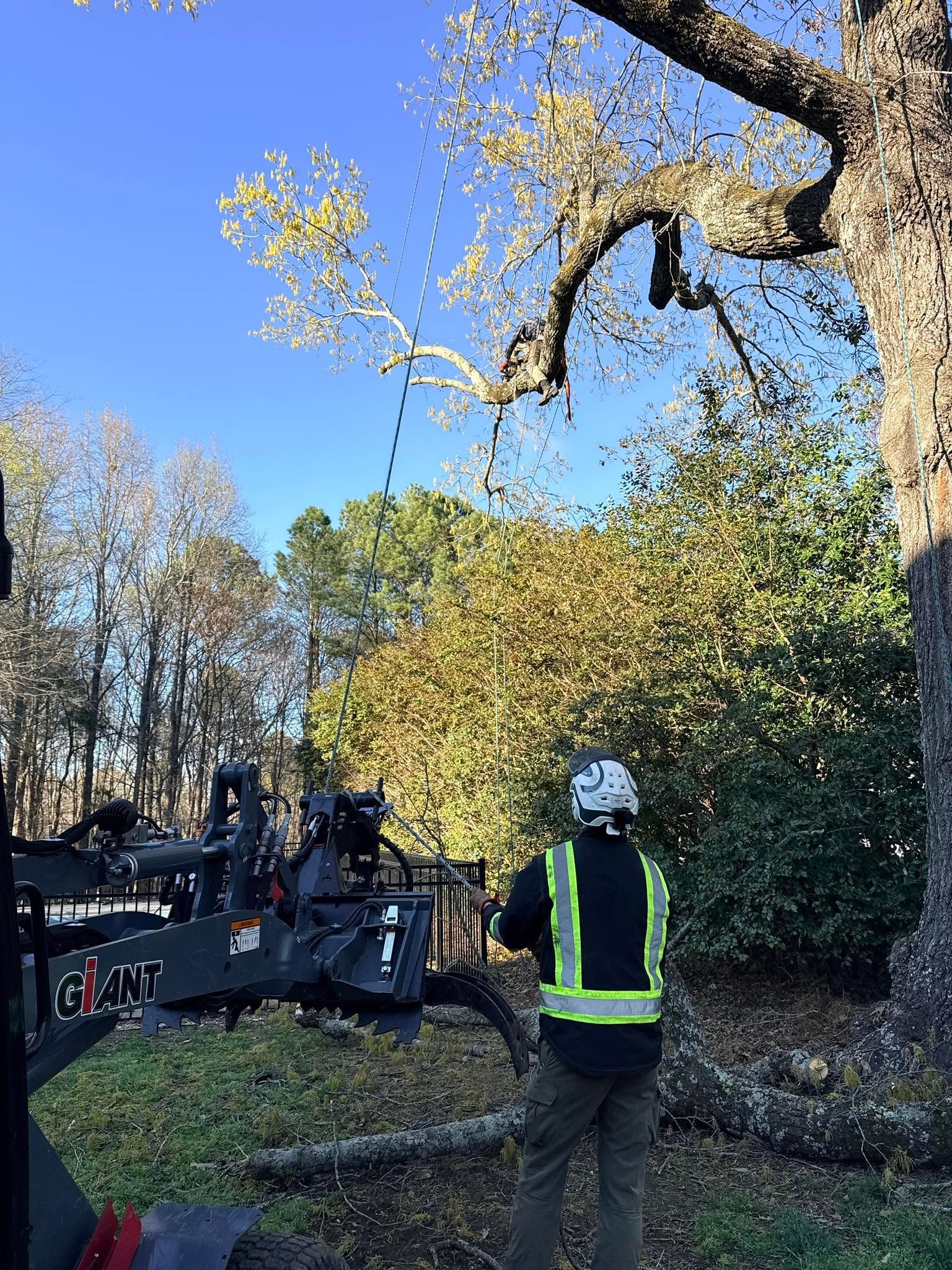
Residential tree work starts with evaluating each tree's structural condition, health status, and position relative to your home, driveway, utilities, and landscaping. Decisions about removal versus preservation depend on factors including visible decay, root stability, lean angle, and whether corrective pruning can restore safety. Equipment selection and rigging techniques are planned to prevent damage to nearby plantings, hardscaping, and structures during the removal or trimming process.
After completion, you notice cleared sightlines where branches previously blocked windows or walkways, eliminated contact points where limbs scraped roofing or siding, improved sunlight reaching lawn areas that were previously shaded into decline, and restored access along driveways or pathways obstructed by low-hanging growth. Properties with storm-damaged trees see removed hazards that no longer threaten to fall during the next weather event, while stump grinding leaves level ground ready for replanting or lawn restoration.
Residential projects include complete debris removal, which involves chipping branches, hauling logs, raking scattered twigs from planting beds, and leaving your property clean without requiring additional cleanup effort. Ongoing care recommendations are provided based on the remaining trees, including optimal pruning schedules to maintain the improvements and prevent future hazards from developing as trees continue growing.
What Homeowners Usually Ask
Residential tree work raises questions about timing, project scope, and what to expect during and after service completion.
TSR Tree Service, LLC customizes residential tree care based on your property's specific conditions, from addressing immediate hazards to establishing maintenance schedules that keep trees healthy and your landscape attractive. Schedule an evaluation to review which trees need attention and receive recommendations tailored to your property's layout and tree population.
How do you protect landscaping during tree removal?
Equipment is positioned to minimize ground disturbance, rigging controls where limbs and sections land, and plywood mats distribute weight across sensitive areas like flower beds or newly seeded lawn zones to prevent compaction and rutting.
What determines whether a tree should be removed or just trimmed?
Structural assessment examines trunk decay, root plate stability, canopy dieback percentage, and lean direction—trees with extensive interior rot, significant lean toward structures, or more than forty percent dead canopy typically require removal rather than corrective pruning.
When is the best time to schedule tree trimming in Wake Forest?
Late winter before spring growth starts allows cuts to heal quickly as sap flow increases, though hazard trimming to clear roofs and driveways can occur year-round when safety concerns outweigh timing optimization.
What happens to the wood after tree removal?
Logs are either hauled away as part of standard cleanup, cut into firewood lengths and stacked on-site if you request it, or processed into mulch depending on tree species and your preference for reusing the material.
How soon can a stump be ground after tree removal?
Grinding can occur immediately after the tree is removed and debris is cleared, or scheduled separately if you need time to decide on replanting plans or landscape redesign for that area.